
AutoFlex shafts can be a worthwhile premium upgrade for golfers who respond well to a very light, unusually flexible shaft, but they are not an automatic distance fix and proper fitting matters more than the hype.
The current AutoFlex range has also moved well beyond the original pink shaft. You can now choose from the Original, Dream7, Joy365, and Flex One driver models, with fairway, hybrid, and iron options also available.
The price remains the biggest obstacle. Current driver shafts start around $790 direct from AutoFlex, while Dream7 and Joy365 drivers are listed at $880.
Before spending that much on a shaft, there are eight things you should understand.
1. What Is the AutoFlex Golf Shaft?
AutoFlex is a premium golf shaft brand developed by Dumina in Korea. The concept became famous because the shafts feel considerably softer and lighter than most golfers expect from a high-performance driver shaft.
Instead of matching traditional assumptions that faster players always need a heavier and stiffer shaft, AutoFlex uses its own flex system and what the company calls Korean Hidden Technology, or KHT.
The manufacturer positions the design around creating speed with a smoother swing rather than forcing the golfer to swing harder.
That does not mean one AutoFlex shaft works for everyone.
The current range contains several different profiles:
| AutoFlex model | Current positioning | Driver speed range published by AutoFlex |
|---|---|---|
| Original | The original AutoFlex feel and the firmest overall AutoFlex profile | Approximately 70-120 mph across available flexes |
| Dream7 | Slightly softer than Original with an updated tip section | Approximately 60-115 mph across available flexes |
| Joy365 | Softer in the hands with more kick, aimed particularly at smoother and slower swings | Approximately 65-110 mph across available flexes |
| Flex One | Single-spec ultralight option | 60-90 mph |
Those speed bands are AutoFlex’s own fitting recommendations, not universal golf shaft rules. Tempo, transition, strike pattern, head weight, playing length, and the way you deliver the club still matter.
If you want a broader explanation of what a golf shaft actually changes, our guide to the different types of golf shafts is a useful starting point.
2. Are AutoFlex Shafts Any Good?
AutoFlex is a serious golf shaft rather than a novelty, but its unusual feel will suit some swings much better than others.
The most obvious difference is how much the shaft loads during the swing. If you come from a conventional stiff or extra-stiff driver shaft, an AutoFlex can feel surprisingly soft when you first waggle or swing it.
That can be unsettling.
Golfers who adapt well often describe the shaft as smooth and easy to load. A golfer with a violent transition may have a harder time matching the timing of that movement.
A useful independent example came from a 2026 Golf Monthly test of the current shaft family. The tester found the Original AutoFlex produced a very smooth sensation and a modest ball-speed increase, but his timing and dispersion needed time to settle.
That is much more realistic than promising every golfer an extra 10, 20, or 30 yards.
AutoFlex itself publishes distance and speed claims, but those are manufacturer-reported averages rather than guaranteed Windtree performance figures.
Your result depends heavily on what shaft you are replacing and whether the complete driver is properly configured.
The older version of this article also suggested that AutoFlex naturally promotes a draw. That is too broad.
A shaft can influence how a golfer delivers the head, but it does not contain a built-in draw setting. Some players may deliver the face differently with the softer profile, while others may see no consistent change in shot shape.
The older Rick Shiels review below remains a useful look at how unusual the original AutoFlex concept feels compared with a conventional driver shaft:
3. Which AutoFlex Shaft Should You Choose?
For a current AutoFlex purchase, the model and flex code both matter.
The Dream7 deserves particular attention because it is a current second-generation AutoFlex family and is also the AutoFlex model represented by the genuine Amazon products supplied in the Koala research.
AutoFlex describes Dream7 as slightly softer than the Original but with a revised tip section intended to provide greater stability through impact.
AutoFlex Dream7 Fitting Chart
| Dream7 flex | Weight | AutoFlex driver speed range | Recommended swing weight |
|---|---|---|---|
| SF305 | 39g | 60-75 mph | C5-C8 |
| SF305X | 44g | 70-85 mph | C8-C9 |
| SF405 | 47g | 80-95 mph | C9-D0 |
| SF405X | 50g | 90-105 mph | C9.5-D0.5 |
| SF505 | 52g | 100-110 mph | D0-D1 |
| SF505X | 57g | 105-115 mph | D0.5-D1.5 |
Use that chart as a starting point, not as a substitute for watching the ball flight.
If you sit inside two overlapping ranges, your transition and preferred feel can affect which model works better. AutoFlex itself recommends fitting rather than assuming swing speed provides the entire answer.
AutoFlex Dream7 Orange Driver Shaft SF405
This Dream7 SF405 option is aimed by AutoFlex at golfers in the 80-95 mph driver-speed range. The current Dream7 specification lists it at 47 grams.
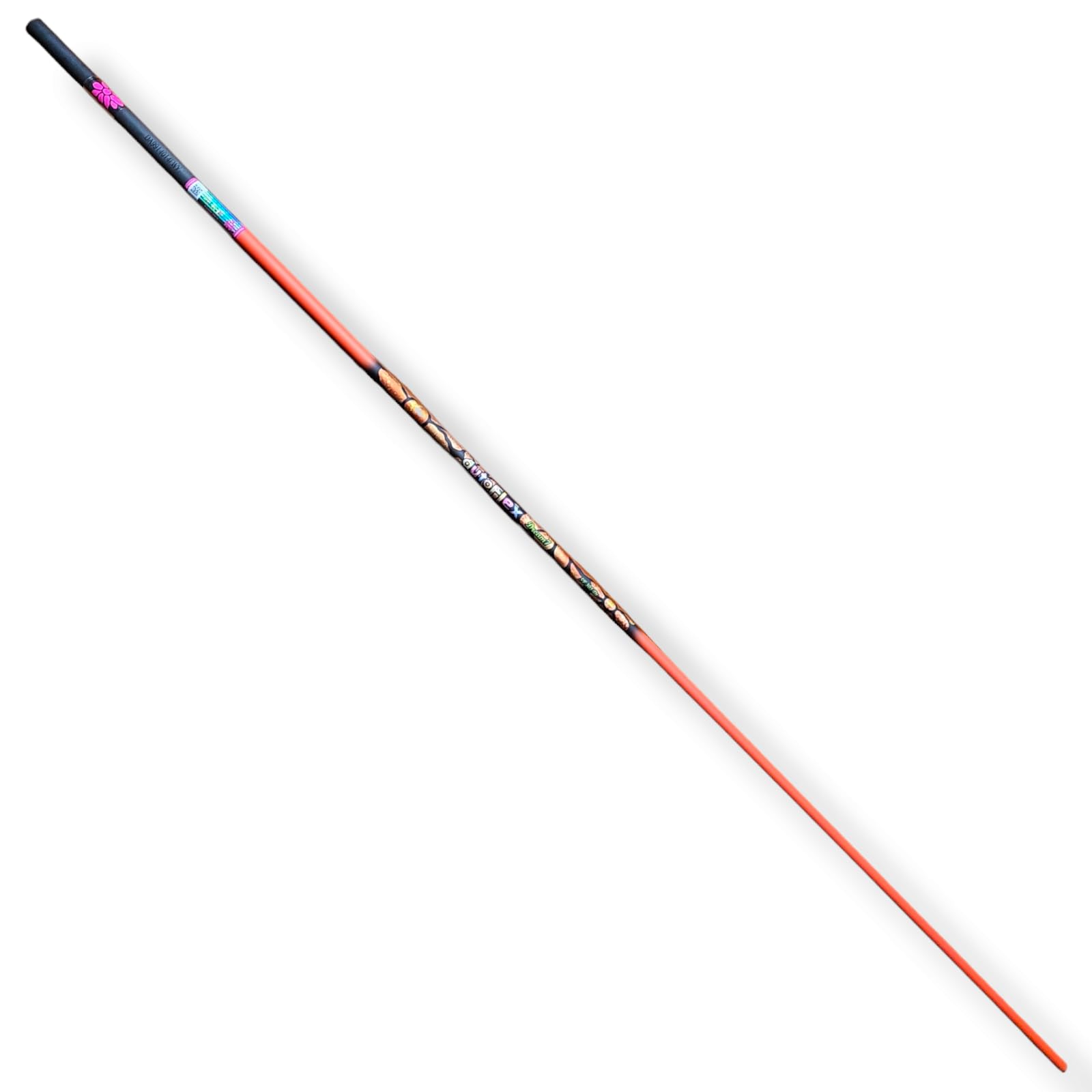
Check current availability for the Dream7 Orange driver shaft on Amazon.
AutoFlex Dream7 White and Orange Driver Shaft SF305
The SF305 is the lightest current Dream7 driver option at 39 grams and is positioned by AutoFlex for driver speeds of 60-75 mph.
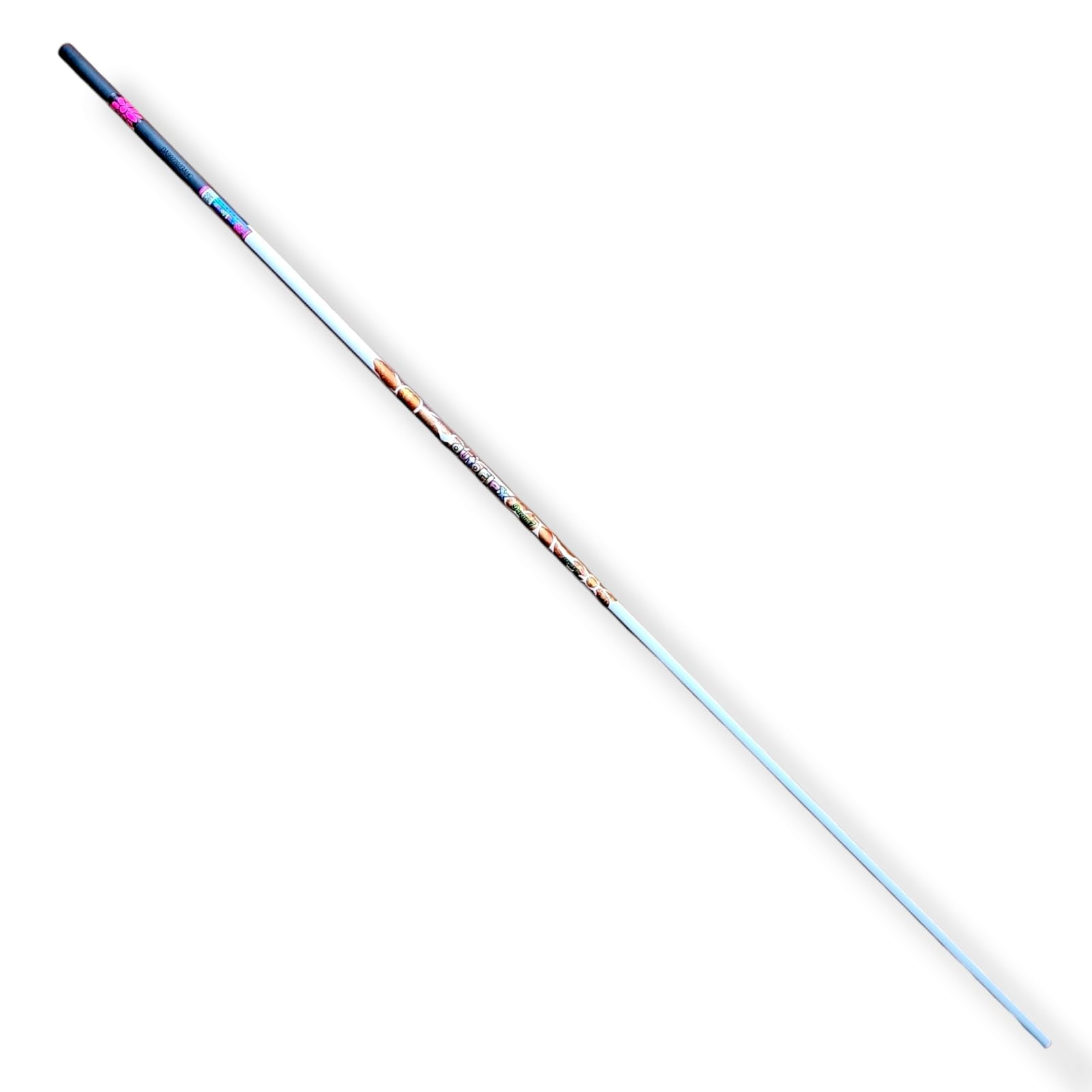
See the Dream7 SF305 option on Amazon.
AutoFlex Dream7 White and Orange Driver Shaft SF305X
The SF305X moves up to 44 grams. AutoFlex currently places it in the 70-85 mph driver-speed range.
View the Dream7 SF305X listing on Amazon.
Amazon sellers, pricing, and inventory can change. Check the exact flex and seller information before ordering, especially because AutoFlex is an expensive product and the same Dream7 cosmetic design is available across several specifications.
4. AutoFlex Fitting Is More Important Than Simply Choosing a Flex
AutoFlex is unusually sensitive to the way the entire driver is built, particularly head weight, swing weight, playing length, and your transition.
This is where buying an expensive raw shaft and installing it without thinking about the finished club can go wrong.
AutoFlex publishes a recommended swing-weight range for each driver shaft. The lighter and softer specifications generally sit much lighter than the conventional D2 or D3 driver setup many golfers are familiar with.
The company’s current guidance also encourages a smooth takeaway and transition rather than trying to overpower the shaft.
That does not mean you need to rebuild your golf swing around AutoFlex.
It means the design works best when the shaft is allowed to load naturally rather than being aggressively forced from the top.
Playing Length Matters
The current Dream7 and Original driver shafts are supplied at a raw length of 45 inches.
AutoFlex’s product pages recommend a 45-inch finished build as a useful way to control swing weight, while its technical guidance allows individual driver builds to vary according to the golfer.
For drivers, AutoFlex says not to tip-trim the shaft. Driver length should be adjusted from the butt end.
If you are considering a shorter build, our guide to shortening a driver shaft explains what happens to more than just the finished length.
Head Weight Matters Too
A very light shaft does not automatically create the correct swing weight.
If the driver head is relatively heavy, the finished club can still feel head-heavy. AutoFlex recommends paying attention to interchangeable head weights where available rather than relying entirely on counterweighting the grip end.
This is one reason a knowledgeable fitter or club builder can add real value with AutoFlex.
If you are already spending $790 or more on a shaft, getting the head weight and finished specifications right is a much better strategy than guessing.
Our golf shaft fitting guide covers the broader variables worth discussing before choosing any premium aftermarket shaft.
5. Is the AutoFlex Shaft Legal?
Being extremely flexible does not make a golf shaft illegal.
The USGA Equipment Rules do not set a conventional flex label or minimum stiffness that a golf shaft must meet.
Instead, a shaft must satisfy construction requirements involving straightness, bending, twisting, and attachment to the clubhead.
USGA guidance says a conventional shaft with a circular cross-section would normally be expected to conform unless there is specific evidence to the contrary.
That is a more accurate way to explain AutoFlex legality than simply saying every shaft is “USGA approved.”
The USGA does not maintain the same type of public consumer-facing conforming list for shafts that it does for driver heads.
If equipment conformity is critical for a particular competition, the player is ultimately responsible for using conforming equipment. You can review the USGA shaft equipment requirements directly.
AutoFlex has also appeared in professional competition. For example, PGA Tour equipment coverage documented Jimmy Walker switching to an AutoFlex driver shaft in 2023.
That should not be interpreted as proof that today’s professional tours are full of AutoFlex shafts. Tour equipment changes constantly, and the older Windtree article’s list of professional users should not be presented as a current what’s-in-the-bag list.
6. How Much Do AutoFlex Shafts Cost and Where Can You Buy Them?
AutoFlex remains one of the more expensive aftermarket shaft families in golf.
Current U.S. direct pricing checked in August 2026 includes:
| AutoFlex shaft | Current direct price |
|---|---|
| Original driver shaft | $790 |
| Flex One driver shaft | $790 |
| 2026 Limited Edition Original driver shaft | $850 |
| Dream7 driver shaft | $880 |
| Joy365 driver shaft | $880 |
| Original fairway shaft | $625 |
| Dream7 fairway shaft | $680 |
| Original hybrid shaft | $625 |
| Dream7 hybrid shaft | $680 |
| Original iron shaft | $210 each |
| Dream7 iron shaft | $230 each |
Prices checked August 18, 2026 and subject to change.
The official U.S. AutoFlex website is the most straightforward source if authenticity and access to the complete range are your priorities.
AutoFlex currently advertises free shipping on its U.S. site, so the old Windtree claim that buyers must pay an $85 FedEx Priority charge is no longer current.
The company also maintains an authorized dealer locator if you would rather buy through a fitter or local shop.
What Is the AutoFlex Return Policy?
The current U.S. policy allows a return request on a new shaft within 30 days of delivery.
AutoFlex says customers can currently choose either full store credit, subject to the stated deductions, or a refund to the original payment method with a 15% restocking fee plus applicable shipping or discount deductions.
It also advertises a one-year warranty on its shafts.
Check the policy for the exact product before ordering. Limited editions and certified-used products can have different rules, and Amazon purchases are governed by the terms shown on the relevant Amazon listing.
Be Careful With Counterfeits
AutoFlex itself emphasizes counterfeit risk and promotes buying direct or through authorized dealers.
That is worth taking seriously with a shaft at this price.
If buying through Amazon or another marketplace, verify the seller, exact model, flex code, condition, and return terms before paying. A suspiciously cheap shaft deserves extra scrutiny.
7. AutoFlex Is Not Just a Driver Shaft Anymore
The original Windtree article focused heavily on the driver, but the current range is considerably broader.
AutoFlex now sells driver, fairway wood, hybrid, and iron shafts.
The Original family currently includes all four categories, while Dream7 also has driver, fairway, hybrid, and iron versions.
Joy365 is available in driver, fairway, and hybrid configurations.
There is currently no AutoFlex putter shaft.
AutoFlex Fairway Shafts
The current Original fairway shaft is supplied at 43 inches raw with a 0.335-inch tip. Dream7 and Joy365 fairway models are also available.
You should not automatically install the same flex code you use in the driver without considering the heavier fairway wood head and the finished swing weight.
AutoFlex Hybrid Shafts
Original and Dream7 hybrid shafts are also current products.
AutoFlex’s fitting and trimming guidance varies according to the hybrid number, so this is another area where following the manufacturer’s build instructions matters.
AutoFlex Iron Shafts
AutoFlex sells both Original and Dream7 iron shafts.
The Original is currently $210 per shaft, while the Dream7 is $230 per shaft.
That means a full iron-set conversion becomes a substantial investment very quickly.
AutoFlex currently sells its hybrid and iron shafts raw and uncut rather than as fully built clubs, so you will need appropriate club-building work.
If you are comparing graphite iron options, our guide to iron shaft weight explains why simply choosing the lightest shaft is rarely the whole answer.
8. Is an AutoFlex Shaft Worth the Money?
AutoFlex can be worth the money if testing shows that its light, soft profile improves your driver performance without hurting dispersion, but $790 to $880 is too much to spend on faith alone.
The strongest argument for AutoFlex is not that it guarantees a particular number of extra yards.
It is that the unusual combination of low weight and significant shaft loading can give some golfers a different way to produce speed without feeling as though they need to force the swing.
AutoFlex Pros
- Very lightweight driver options
- Distinctive smooth and active feel
- Current range covers a wide spread of driver speeds
- Original, Dream7, Joy365, and Flex One provide different feel options
- Fairway, hybrid, and iron shafts are also available
- Multiple fitting specifications and swing-weight recommendations are published
- Available direct, through authorized dealers, and in selected Amazon listings
AutoFlex Cons
- Extremely expensive compared with many aftermarket shafts
- Very soft feel can require an adjustment period
- Aggressive transitions may not suit the AutoFlex sensation
- Head weight and swing weight need careful attention
- Amazon shaft-only purchases may require additional club-building work depending on the listing
- No shaft can guarantee a specific speed or distance gain
- A full set of AutoFlex iron shafts becomes a major investment
The deciding factor should be performance, not curiosity.
If you can test AutoFlex against your current shaft using the same driver head, ball, and sensible build specifications, you will learn far more than you can from an online distance claim.
If you cannot test before buying, make sure you understand the return policy and choose your specification carefully.
Golfers who prefer a more conventional shaft feel may also want to compare AutoFlex with other premium profiles. Our Tensei shaft review covers a very different family of aftermarket shafts.
AutoFlex Golf Shaft FAQs
Who Makes AutoFlex Golf Shafts?
AutoFlex was developed by Dumina in South Korea. The current U.S. AutoFlex site continues to market the shafts as Korean-made products using its KHT design concept.
What Is the Difference Between AutoFlex Original and Dream7?
AutoFlex describes the Original as the firmest overall AutoFlex profile with the original feel.
Dream7 is slightly softer overall and uses an updated tip section intended to provide more stability and power through impact.
What Is AutoFlex Joy365?
Joy365 is the softer-feeling second-generation option.
AutoFlex positions it toward golfers who want additional kick and a gentler feel in the hands, particularly smoother-tempo players such as some seniors, women, and juniors.
What Is AutoFlex Flex One?
Flex One is a current single-spec driver shaft weighing 39 grams.
AutoFlex currently recommends it for driver club speeds from 60 to 90 mph, particularly with a relatively smooth tempo.
Does an AutoFlex Shaft Automatically Add Distance?
No.
AutoFlex publishes manufacturer-reported speed and distance gains, but there is no guaranteed number for an individual golfer.
Your result depends on fit, strike, launch, spin, delivery, head weight, playing length, and the shaft you are replacing.
Does AutoFlex Promote a Draw?
Not automatically.
Some golfers may deliver the club differently with the softer shaft and produce more right-to-left curvature, but AutoFlex should not be treated as a dedicated anti-slice or draw-biased shaft.
Do Tour Players Use AutoFlex?
AutoFlex has been used and tested in professional golf. PGA Tour equipment reporting documented Jimmy Walker putting an AutoFlex driver shaft into play in 2023, and other professionals have experimented with the brand over the years.
Tour equipment changes frequently, so an old list of players should not be treated as a current endorsement roster.
Does Club Champion Sell AutoFlex?
The old version of this article said Club Champion had decided not to offer AutoFlex, based on comments from several years ago.
That is no longer reliable enough to state as current policy.
Fitting inventories change by company and location. If you want to test AutoFlex today, use the current AutoFlex authorized dealer locator or contact the fitter directly before booking.
How Long Does AutoFlex Shipping Take?
Shipping time depends on stock, whether you order a custom build, and the destination.
The old claim of a fixed five-to-seven-day delivery period plus an $85 FedEx charge is no longer appropriate. AutoFlex’s current U.S. site advertises free shipping, but check the live order information for the specific product.
Can You Buy a Used AutoFlex Shaft?
Yes. AutoFlex currently sells its own certified-used inventory, and used shafts also appear through golf resellers and marketplaces.
Check the exact flex, playing length, adapter, grip, condition, and whether the shaft has been altered before buying.
AutoFlex Golf Shaft Review: The Verdict
AutoFlex is one of the most unusual premium shaft concepts in golf, and for the right swing it can provide a genuinely different combination of light weight, active loading, and ease of speed.
It is not a universal upgrade.
A golfer with a smooth or moderate transition may love the way an AutoFlex loads. Another player may struggle to time the same amount of movement and achieve better results with a more conventional shaft.
The current range is also much easier to understand than simply referring to “the AutoFlex shaft.” Original, Dream7, Joy365, and Flex One each occupy a different position within the family.
If you are considering one, choose the correct model first, build the club around the recommended specifications, and judge the result against your existing shaft rather than against the manufacturer’s best-case distance claims.
At $790 to $880 for a current driver shaft, that level of care is not optional. It is the difference between an expensive experiment and a properly considered equipment upgrade.